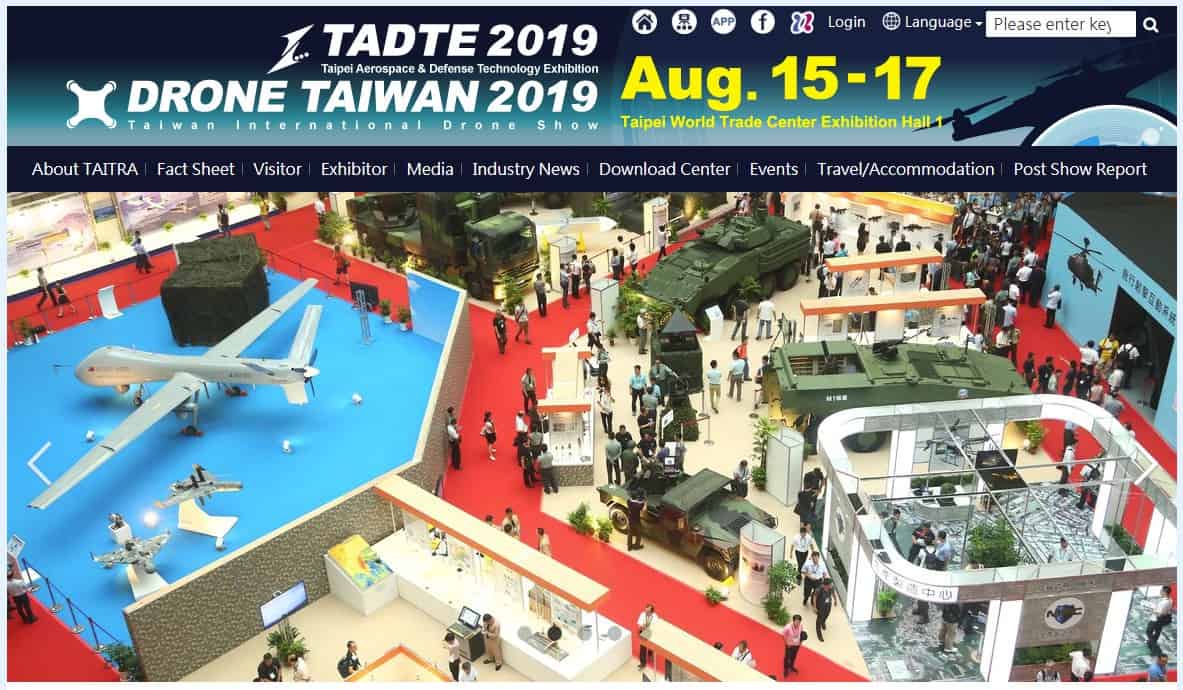
Taipei Aerospace & Defense Technology, Booth# A1123, A1125, A1024, A1026, Taipei Taiwan 2019/8/15~8/17




Torque precision is critical in industries where bolting accuracy directly affects product quality and safety. The ZIPPTORK torque controller, paired with a wireless torque transducer, offers an advanced solution for torque tools, ensuring optimal control and consistency in fastening applications.
Advanced Torque Control for Torque Tools
The ZIPPTORK torque controller provides superior control when integrated with torque tools, allowing for enhanced torque-controlled results. When used with the wireless torque transducer, it offers real-time torque measurement and feedback, ensuring precise control throughout the bolting process. This combination significantly reduces the risk of over-torquing or under-torquing while ensuring compliance with specified torque values.
Unique Patented Wireless Torque Transducer
The ZIPPTORK system features a unique, patented wireless torque transducer, the only torque transducer capable of impacting tools like air impact wrenches. This innovation allows for accurate torque measurement even in high-impact bolting action, setting a new standard in the industry. The wireless torque transducer further improves the air impact wrench‘s torque accuracy to within 10% when paired with the torque controller. It can monitor and automatically compensate for the pulse wrench output, making it highly effective in complex joint types or environments with unstable air supply conditions.
Transforming Air Impact Wrenches into Controlled Tools
A standout feature of the ZIPPTORK torque controller is its ability to use air impact wrenches. This integration effectively transforms standard air impact wrenches into controlled wrenches capable of achieving a high torque range with 10-15% torque-controlled accuracy. This level of precision is particularly beneficial for applications requiring consistent and repeatable torque results.
Benefits in Construction Equipment Assembly Lines
The ZIPPTORK torque controller and wireless torque transducer combination offer significant advantages in construction equipment assembly lines, especially where higher bolting torque is required. The key benefits include:
The ZIPPTORK torque controller and wireless torque transducer significantly advance torque tool technology. By enabling precise torque control and transforming air impact wrenches into high-accuracy tools, they offer substantial benefits for industries requiring efficient and reliable bolt fastening. This innovation is particularly advantageous in machinery assembly lines where high torque accuracy is essential for product integrity and operational efficiency.
Hand-Arm Vibration Syndrome (HAVS) is a serious and irreversible medical condition caused by prolonged exposure to vibration, often from power tools such as grinders, chipping hammers, and impact wrenches. While HAVS develops gradually, its effects—ranging from tingling fingers to permanent loss of grip strength—can significantly impact a worker’s quality of life. Fortunately, modern low vibration or shock-reduced air tools offer an effective way to reduce these risks.
HAVS occurs when repeated vibration damages blood vessels, nerves, and muscles in the hand and arm. Common symptoms include:
Numbness or tingling in fingers
Reduced dexterity or grip strength
“White finger” (blanching of fingers due to poor circulation)
Chronic pain and discomfort
According to occupational safety standards, such as the EU’s Vibration at Work Regulations and OSHA’s guidelines, reducing vibration exposure is a critical part of workplace health and safety.
Traditional air tools transfer a significant amount of vibration directly into the operator’s hands. Over time, this repeated exposure accelerates the development of HAVS. Shock-reduced air tools are specifically engineered to limit this impact.
Vibration-Dampening Mechanisms – Specially designed internal components, such as shock-absorbing springs or air-cushion chambers, reduce the transfer of vibration.
Ergonomic Grip Design – Handles with vibration-isolating materials, like rubber or composite grips, minimize the amount of energy reaching the hand.
Optimized Tool Balance – Well-balanced tools reduce strain on the wrists and arms, preventing excessive force application.
Advanced Impact Mechanisms – Systems like double hammer or twin dog impacts distribute force more evenly, lowering peak vibration levels.
Adopting low vibration air tools doesn’t just protect workers—it also improves productivity and efficiency:
Longer working periods without fatigue – Reduced vibration means operators can work comfortably for longer durations.
Higher precision and control – Less hand strain leads to more accurate work, especially in detailed applications.
Lower absenteeism and turnover – Healthy employees are less likely to take time off due to vibration-related injuries.
Compliance with safety regulations – Using low vibration tools helps companies meet legal vibration exposure limits.
While low vibration tools are an essential step, HAVS prevention also requires proper work practices:
Rotate tasks to limit individual exposure time.
Keep tools well-maintained to avoid unnecessary vibration from worn parts.
Use anti-vibration gloves for added protection.
Train operators on correct tool handling techniques.
Monitor vibration exposure levels regularly.
Hand-Arm Vibration Syndrome is preventable with the right equipment and practices. By investing in low vibration or shock-reduced air tools, companies not only protect their workforce but also enhance efficiency, precision, and compliance. In industries where air tools are used daily, this isn’t just an upgrade—it’s a responsibility.

Hand-Arm Vibration Syndrome (HAVS) is a progressive, preventable condition caused by prolonged exposure to tool-generated vibration. It can lead to numbness, reduced dexterity, pain, and—in severe cases—irreversible circulatory and neurological damage. For manufacturers, shipyards, foundries, and maintenance crews, HAVS isn’t just a health risk; it’s also a risk to quality, productivity, and liability.
ZIPP TOOL designs low-vibration and shock-reduced pneumatic tools to break this link. Below is a practical, engineering-first look at how ZIPP’s design choices translate into measurably lower vibration at the operator’s hand, and how to implement them to reduce HAVS risk across your facility.
“Low vibration” is not a label—it’s an engineering outcome. Every 1–2 m/s² saved at the hand can significantly extend safe trigger time and reduce cumulative daily exposure.
ZIPP’s portfolio includes purpose-built, low-vibration and shock-reduced models such as the ZNS-392 Shock-Reduced Needle Scaler and the ZS350D Industrial Air Saw (Extreme Low Vibration), alongside grinders, sanders, and impact tools designed with vibration mitigation baked in. Here’s what’s under the hood:
Unbalanced reciprocating or rotating masses are a primary vibration source. ZIPP uses tuned counterweights and optimized rotor/rod mass to cancel out first-order forces in saws, scalers, and grinders—shrinking the energy transmitted to the handle.
Result: Smoother feel under load, less tingling after a cycle, and better cut or grind quality.
On select models, the handle is decoupled from the motor frame via elastomeric isolators or engineered damping stacks. In scalers, shock-absorbing linkages disrupt the spike-y impulses from each needle/striker.
Result: Lower peak accelerations (the “punches” that fatigue nerves), not just lower RMS levels.
In shock-reduced needle scalers like the ZNS-392, the striker mass, impact frequency, and air metering are balanced to minimize recoil while maintaining removal rate. Needle geometry and bundles are selected to reduce chatter without smearing scale.
Result: Faster surface prep with less hand sting and fewer micro-pauses from operator discomfort.
ZIPP’s valving and exhaust routing avoid pressure oscillations that amplify vibration and noise. Silenced exhaust not only protects hearing; it also reduces the pressure fluctuations that can couple back into the tool body.
Result: Quieter, steadier tools that are easier to control—critical for fine work and long shifts.
Neutral wrist angles, contoured grips, and anti-slip surfaces distribute contact forces across the palm and fingers. On grinders and saws, carefully chosen grip diameters reduce pinch forces and white-knuckle squeezing—both known HAVS multipliers.
Result: Less clamping force required for control → less transmitted vibration and less fatigue.
A low-vibration tool can still vibrate if the accessory is poorly chosen. ZIPP validates balanced abrasives, matched needles, and tuned saw blades to maintain the tool’s designed balance.
Result: You get the vibration performance you paid for—consistently.
Lower-vibration tools are the cornerstone, but results come from system thinking. Here’s a concise plan you can implement immediately.
A common misconception is that HAVS controls are a cost center. In practice, low-vibration tools deliver:
Facilities often find that the productivity and quality gains alone justify upgrading critical stations to ZIPP shock-reduced models—before accounting for any reduction in injury risk and claims.
Switching to ZIPP low-vibration and shock-reduced air tools is one of the highest-leverage actions you can take to reduce HAVS risk. Pair the tools with good work design, proper accessories, and disciplined maintenance, and you’ll see safer hands, steadier work, and stronger throughput.