News

ZIPP TOOL Launches Next-Generation Composite Air Impact Wrenches: ZIW1020C and ZIW1010C MINI

Lightweight Design Meets Industrial Power for Modern Assembly Applications
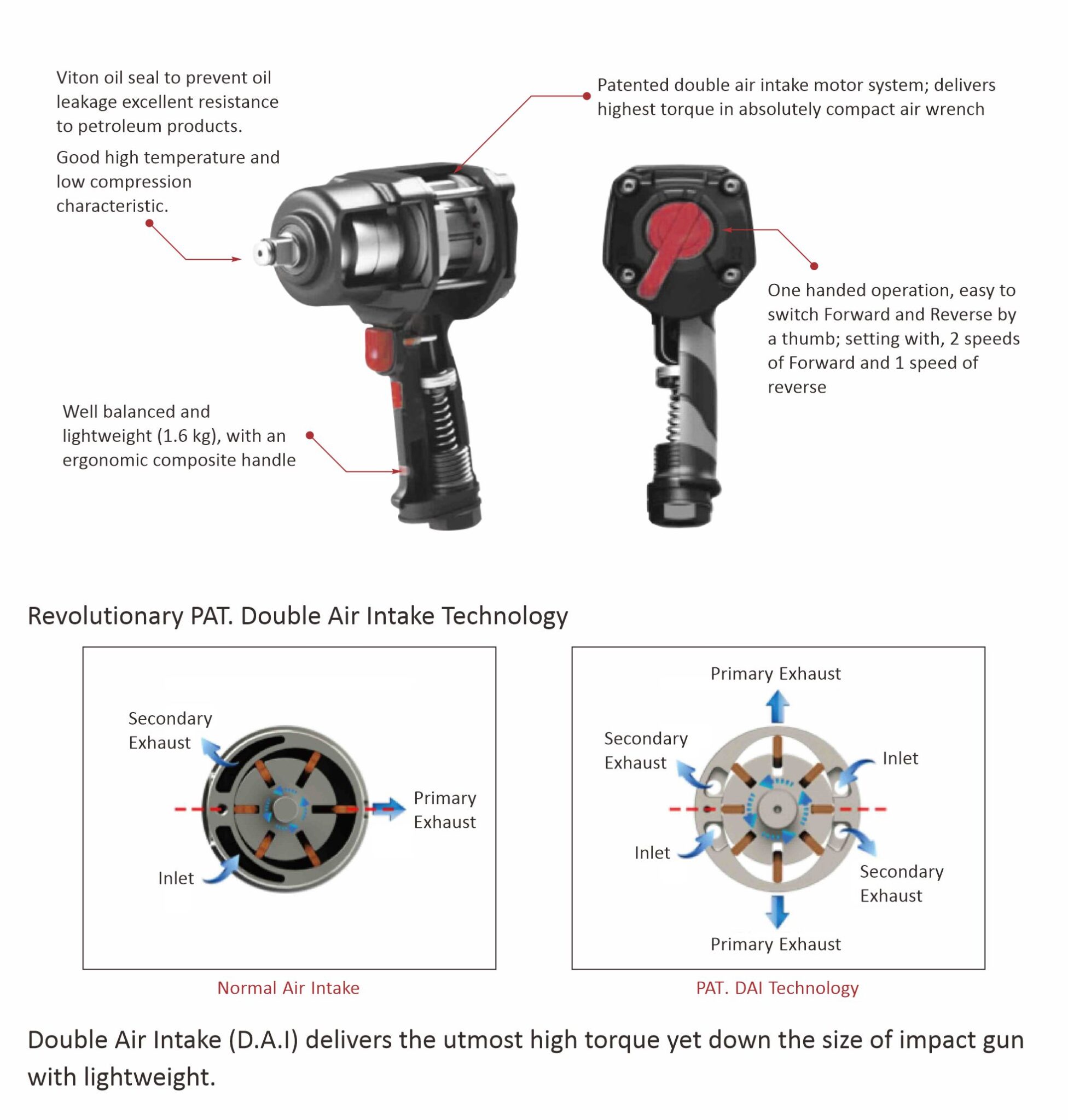
ZIW1010C ZIW1020C Twin Turbo Air Impact Wrench

ZIPP TOOL, a specialist in professional and industrial air tools for assembly and maintenance applications, has announced the launch of two new pneumatic impact wrenches designed to meet the evolving needs of modern industrial users: the ZIW1020C 1/2″ Composite Air Impact Wrench and the ZIW1010C 1/2″ MINI Composite Air Impact Wrench.

The new models combine lightweight composite construction, ergonomic handling, and high torque performance, offering operators improved productivity while reducing fatigue during extended use.

As industries continue balancing productivity, operator safety, and cost efficiency, ZIPP TOOL’s latest additions aim to provide a practical upgrade path for workshops, assembly lines, automotive service operations, and industrial maintenance environments.

Addressing Today’s Industrial Challenges

Compressed air tools remain essential across manufacturing and maintenance sectors due to their durability, continuous operation capability, and lower total cost of ownership compared with battery-powered alternatives in high-duty environments.

However, traditional metal-bodied impact wrenches often present challenges such as excessive weight, vibration transfer, and operator fatigue — especially in repetitive assembly tasks.

The ZIW1020C and ZIW1010C were developed specifically to address these issues.

By integrating advanced composite housing technology, ZIPP TOOL engineers achieved significant weight reduction while maintaining structural strength and resistance to harsh workshop conditions.

According to ZIPP TOOL, the goal was simple:

“Deliver professional torque performance without the physical burden traditionally associated with pneumatic impact tools.”

ZIW1020C: Power and Control for Demanding Applications

The ZIW1020C 1/2″ Composite Air Impact Wrench is positioned as a versatile industrial workhorse suitable for automotive repair, heavy equipment maintenance, assembly production lines, and general industrial fastening tasks.

Key highlights include:

  • High torque output for stubborn fasteners and industrial assemblies

  • Durable twin-hammer impact mechanism for consistent performance

  • Lightweight composite body reduces operator fatigue

  • Ergonomic grip design improves handling stability

  • Forward/reverse control with adjustable power settings

The composite housing not only reduces weight but also helps insulate against the transfer of cold air, improving operator comfort in continuous-use environments.

The tool’s balanced torque delivery allows users to maintain control while achieving efficient fastening and removal operations — an important factor in preventing over-tightening or fastener damage.

ZIW1010C MINI: Compact Size, Professional Performance

Complementing the full-size model, the ZIW1010C 1/2″ MINI Composite Air Impact Wrench targets applications where accessibility and maneuverability are critical.

Despite its compact form factor, the MINI version delivers impressive torque performance relative to its size, making it ideal for:

  • Tight engine compartments

  • Confined assembly spaces

  • Maintenance operations requiring mobility

  • Overhead or extended-use applications

The shorter body length enables operation in restricted spaces where standard impact wrenches cannot easily reach, improving efficiency and reducing the need for additional extensions or specialty tools.

Its reduced weight also makes it particularly suitable for technicians performing repetitive fastening operations throughout the day.

Composite Construction: More Than Weight Reduction

While lightweight design is a visible advantage, ZIPP TOOL emphasizes that composite construction provides multiple operational benefits:

  • Vibration damping to reduce operator strain

  • Thermal insulation from cold compressed air exhaust

  • Impact resistance for workshop durability

  • Corrosion resistance compared to traditional metal housings

These characteristics contribute to improved long-term usability and operator comfort — factors increasingly prioritized by industrial employers seeking to enhance workplace ergonomics and safety.

Designed for Real-World Efficiency

Both new models were engineered with practical usability in mind. Features such as intuitive controls, balanced weight distribution, and optimized air consumption make it easy for users to integrate the tools into existing pneumatic systems without additional infrastructure investment.

Unlike battery tools that require charging cycles and battery management, pneumatic impact wrenches provide uninterrupted operation, making them particularly suitable for high-volume environments.

ZIPP TOOL notes that many industries are now adopting a hybrid strategy — combining cordless mobility with pneumatic reliability for fixed workstations — where tools like the ZIW1020C and ZIW1010C play a key role.

Supporting Productivity and Sustainability

Reducing operator fatigue directly contributes to productivity gains and workplace safety. Lighter tools can help lower repetitive strain risks while maintaining consistent fastening performance across shifts.

Additionally, pneumatic tools typically offer a long service life and simplified maintenance compared with electronic alternatives, supporting sustainability by reducing equipment replacement frequency.

ZIPP TOOL has also focused on serviceability, ensuring that internal components are designed for maintenance efficiency and long-term reliability.

Expanding the ZIPP TOOL Professional Lineup

The introduction of the ZIW1020C and ZIW1010C strengthens ZIPP TOOL’s expanding portfolio of professional air tools and smart fastening solutions. The company continues to develop products aligned with modern industrial trends, including torque monitoring, process traceability, and Industry 4.0 integration.

These new impact wrenches serve as foundational tools that can be paired with advanced torque control and monitoring technologies, supporting customers transitioning toward smarter assembly processes.

Availability

The ZIW1020C 1/2″ Composite Air Impact Wrench and ZIW1010C 1/2″ MINI Composite Air Impact Wrench are now available through ZIPP TOOL’s global distributor network.

Both models are designed for professional users seeking reliable pneumatic performance combined with modern ergonomic design.

About ZIPP TOOL

ZIPP TOOL specializes in professional and industrial air tools engineered for assembly, maintenance, and manufacturing applications worldwide. With a focus on durability, performance, and practical innovation, the company delivers solutions that enhance productivity while maintaining cost efficiency for industrial users.
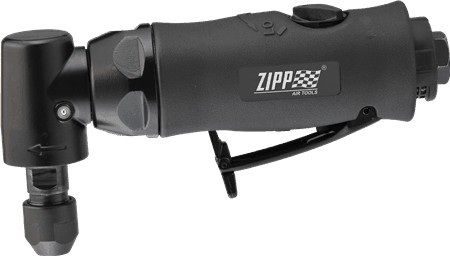
ZIPP TOOL Expands Professional Fastening Solutions with New Dual-Flex Angle Air Impact Wrenches: ZIW340FA and ZIW410FA

Advanced Right-Angle Pneumatic Tools Designed for Tight Spaces, Industrial Flexibility, and High-Efficiency Fastening

ZIPP TOOL has added two new products to its professional pneumatic fastening lineup: the ZIW340FA 3/8” Drive Dual-flex Angle Air Impact Wrench and the ZIW410FA 1/2” Drive Dual-flex Angle Pneumatic Impact Wrench. Designed for applications where traditional straight-body impact wrenches are difficult to use, these new tools combine compact right-angle access with dual-flex movement and industrial torque power.

The launch addresses the rising demand in automotive service, production assembly, heavy equipment maintenance, and industrial repair sectors, where technicians increasingly require tools that provide torque in tight spaces without compromising durability or control.


Designed for Restricted Access Applications

In many fastening situations, limited space around fasteners is one of the most common challenges for maintenance personnel and assembly workers. Standard impact wrenches often need extra extensions, adapters, or manual adjustments, which increase operating time and reduce efficiency.

ZIPP TOOL’s new dual-flex angle series solves this issue by combining an angle-head design with improved articulation, enabling users to access bolts and nuts in hard-to-reach or obstructed spots.

This design is especially useful in:

  • Engine compartments
  • Suspension systems
  • Transmission assemblies
  • Machinery interior maintenance
  • Structural frame assembly
  • Industrial equipment service zones with restricted hand clearance

The company explains that the goal was to offer not only angled access but also flexibility that adjusts to real workshop conditions, where working angles often change.


Dual-Flex Mechanism Improves Operator Freedom

The key feature of both models is the Dual-flex angle head design, which provides better maneuverability during fastening tasks.

Unlike fixed-right-angle impact tools, dual-flex construction lets operators adjust their working positions more naturally, reducing awkward wrist postures and improving access around nearby components.

This flexibility is especially useful during repetitive maintenance tasks, where technicians need to switch among multiple fastening points in different orientations.

According to ZIPP TOOL engineers, operator ergonomics was a major development priority:

“The objective was not only to access hard-to-reach fasteners, but also to reduce unnecessary movement and fatigue during continuous industrial use.”


ZIW340FA: Compact 3/8″ Drive Solution for Precision and Accessibility

The ZIW340FA 3/8” Drive Dual-Flex Angle Air Impact Wrench is built for medium-duty fastening tasks that need a compact size and easy access.

Its 3/8″ drive configuration makes it particularly suitable for:

  • Automotive repair
  • Motorcycle maintenance
  • HVAC assembly
  • Appliance manufacturing
  • Precision mechanical service

The compact head design enables access in tight spaces where larger drive tools might be impractical.

Key advantages include:

  • Compact right-angle body for confined areas
  • Lightweight construction for extended use
  • Stable torque delivery
  • Smooth trigger response for better fastening control
  • Durable internal impact mechanism for long service life

The ZIW340FA is particularly useful for service technicians who require both reach and speed without constantly switching between manual and powered tools.

ZIW410FA: 1/2″ Drive Torque for Heavier Fastening Work

For larger fasteners and more demanding industrial applications, the ZIW410FA 1/2″ Drive Dual-flex Angle Pneumatic Impact Wrench provides increased torque capacity while maintaining the same flexible access benefits.

This model targets heavier-duty environments such as:

  • Commercial vehicle maintenance
  • Industrial machinery installation
  • Construction equipment service
  • Steel structure assembly
  • Production line fastening requires larger fasteners

The 1/2″ drive platform offers compatibility with common industrial sockets while providing improved fastening and loosening strength.

Its dual-flex design enables users to deliver pneumatic impact force in areas that typically need manual ratchets or long extensions.

Pneumatic Reliability Remains Essential in Industrial Use

While cordless tools are gaining popularity, pneumatic impact tools are still preferred in many professional settings because of their reliable power, lighter weight, and ability to operate continuously.

For fixed workstations and industrial maintenance areas with compressed air systems, pneumatic tools still provide several benefits.

  • No battery charging downtime
  • Stable torque delivery throughout operation
  • Lower long-term consumable cost
  • Reduced tool weight compared with battery-powered equivalents

ZIPP TOOL notes that angle pneumatic tools remain especially valuable because adding battery systems to compact angle tools often increases bulk and reduces accessibility.

Built for Durability in Harsh Workshop Conditions

Both models are built for long-term industrial use, with internal impact structures designed to endure repeated high-load fastening cycles.

Durability features include:

  • Reinforced internal transmission components
  • Industrial-grade bearings
  • Impact-resistant housing design
  • Reliable forward/reverse switching system

Because angle-head tools often face side-load stress during actual use, structural reliability was emphasized throughout product development.

The company also improved airflow pathways to ensure efficient operation while keeping tool dimensions compact.


Supporting Faster Maintenance Cycles

In industrial maintenance, minimizing access time often directly boosts service efficiency. Technicians often spend more time positioning tools than performing actual fastening. Tools that can reach difficult spots quickly can therefore significantly shorten maintenance cycles. The new dual-flex series aims to reduce:

  • Tool repositioning frequency
  • Socket extension requirements
  • Hand-tool fallback situations
  • Operator fatigue during repeated angle fastening

This is especially important in fleet maintenance, recovery from production downtime, and field service operations where speed impacts operational costs.

Expanding ZIPP TOOL’s Professional Pneumatic Portfolio

The release of the ZIW340FA and ZIW410FA demonstrates ZIPP TOOL’s broader plan to expand specialized pneumatic solutions beyond traditional impact-wrench categories.

The company continues to develop tools focused on real-world industrial use cases rather than just laboratory torque numbers.

This product direction aligns with the broader market demand for tools that enhance accessibility, ergonomics, and real-world fastening productivity.


Availability

The ZIW340FA 3/8” Drive Dual-Flex Angle Air Impact Wrench and ZIW410FA 1/2” Drive Dual-Flex Angle Pneumatic Impact Wrench are now available through ZIPP TOOL’s international distributor network.

Both models are designed for professional users who need dependable pneumatic fastening solutions in restricted-access industrial environments.

ZIPPTORK Torque monitoring APP

System settings and configurations on the tablet

How to pair wireless transducer on the tablet with Dongle/Transceiver installed

Static Mode – Use with the torque wrench

Dynamic Mode – Use with non-shut off pulse tool

Torque & Angle Mode – Use with torque wrench or click wrench

Dynamic torque Mode – Use with clutch type tool

Dynamic torque Mode – Use with Air impact wrench

Dynamic torque Mode – Use with auto shut off pulse tool

Job sequence setup – Use with click wrench with torque and angle

ZIPP GROUP has launched a new range of high power air tools for grinding applications

ZIPP GROUP has launched a new range of high power air tools for grinding applications

ZIPP GROUP has launched a new range of high power air tools for grinding applications. Master Abrasives, the UK distributor for ZIPP tools, is offering the 4 newly introduced die grinders from stock.

Andy Wright, Master Abrasives National Sales Manager, commented “the initial range of ZIPP grinders introduced to the UK was extremely popular across our customer base, from bodyshops through to heavier industrial sectors such as foundries. This is thanks to the cost-effectiveness of ZIPP Air Tools, as well as benefits such as higher performance and lower vibration than competitor’s models.”

“So far, ZIPP die grinders have been available in 0.3 Horse Power (HP) and 0.5 HP, ideal for general grinding and de-burring applications. The launch of these higher powered tools, which are 0.9 HP and 1 HP, provides the solution to the heavier duty grinding applications where additional torque is required.”

The ZDG-301 0.9 HP air die grinder is suitable for many automotive and industrial grinding, de-burring and finishing applications. The grinder can be used to clean dies, rotors, backing plates and brake pad mounts. It can also grind valve seats, dress welds and enlarge holes and is compatible with Master® shank mounted abrasive products such as mounted points and carbide burrs. By using 6mm or 3mm collets a wide range of grinding accessories can be used for a wide range applications.

The ZDG-301AL 3.5” 1HP air extension die grinder is an extended version. This new tool features an extended reach of 3.5″.

The ZDG-301L 5.5” 1HP model features a further extended reach of 5.5″ for application in hard-to-reach areas using Master Abrasives shank mounted range of abrasive products.

The ZDG-302 0.9 HP is the right angle die grinder version and again is suitable for de-burring and finishing applications. It is the ideal tool to use with abrasive quick change discs which are available in the Master® range of products.

These new models provide the highest durability in demanding applications and the increased power and torque make them the perfect choice for the more demanding grinding, de-burring and finishing applications

Master Abrasives technical sales representatives offer to demonstrate ZIPP Air Tools free of charge on request to show the capabilities of this cost-effective, high quality range. For further information on specifications of the new range of high power tools by ZIPP Group, download the product catalogue from Master Tool Services website.

The Engineering Behind the Silence: How Shock-Reduced Air Hammers Transformed Operator Safety

The Engineering Behind the Silence: How Shock-Reduced Air Hammers Transformed Operator Safety

When a manufacturer patented the world’s first low-vibration pneumatic tools, it did more than solve a mechanical problem — it redefined what safe industrial tooling looks like.

Walk through any heavy manufacturing floor, automotive repair bay, or construction site, and you will hear it: the sharp, rhythmic hammering of a pneumatic air hammer biting into metal. It is the sound of productivity — and, for millions of workers around the world, the sound of cumulative injury in progress.

Hand-arm vibration syndrome (HAVS) is not dramatic. It does not announce itself like a broken bone or a chemical burn. It accumulates quietly, over months and years, as mechanical vibration travels from a tool handle through the fingers, hand, wrist, and forearm. Nerve endings deaden. Blood vessels constrict. Joints stiffen. By the time symptoms are undeniable, permanent damage has often already been done. For decades, this was simply accepted as the occupational cost of working with pneumatic impact tools.

That acceptance began to change when one manufacturer engineered a fundamentally different solution — and patented it. The development of the shock-reduced air hammer and, alongside it, the world’s first low-vibration air saw, represented not an incremental improvement but a structural rethinking of how pneumatic tools transmit force.

Understanding the Vibration Problem at Its Root

To appreciate why this engineering advance mattered, it is necessary to understand how a conventional air hammer generates and transmits vibration. At its core, a standard pneumatic hammer operates through a reciprocating piston driven by compressed air. The piston accelerates, strikes a retainer and chisel assembly with maximum kinetic energy, and the cycle repeats — typically between 1,000 and 4,500 beats per minute, depending on the tool class.

In this conventional design, nearly all of the mechanical shock energy that does not transfer into the workpiece has only one place to go: backward, through the tool body, into the operator’s grip. The harder the material being worked — cast iron, hardened steel, corroded fasteners — the greater the reflected shock impulse. Rubber or polymer grips can attenuate surface vibration slightly, but they do nothing to address the fundamental mechanical event: a high-mass piston striking a rigid end stop and transmitting that impulse directly up the kinematic chain to the human hand.

International standards bodies have progressively tightened their definitions of safe vibration exposure. The European Union’s Physical Agents Directive establishes a daily vibration exposure action value of 2.5 m/s² (A(8)) and a limit value of 5 m/s². Exceeding those thresholds triggers legal obligations for employers: health surveillance, tool replacement schedules, and exposure time restrictions. Conventional pneumatic hammers frequently exceed the limit value within minutes of continuous use. The industrial implications are significant — operators cannot legally or safely use standard tools for a full working shift without rotating duties, rest breaks, or supplementary protective equipment.

The Patented Architecture: A Decoupled Shock System

The core innovation in the shock-reduced air hammer design lies in mechanical decoupling — physically separating the high-impulse piston strike event from the structure that the operator holds. Rather than allowing shock energy to travel unimpeded from the piston to the tool body to the hand, the patented design interposes an engineered attenuation system between those two mechanical domains.

“The design does not simply dampen vibration after it occurs — it intercepts and redirects the shock impulse before it reaches the operator interface.”

The mechanism involves a precisely tuned internal mass-spring or pneumatic buffer arrangement embedded within the tool body. When the piston delivers its impact to the chisel retainer, the reactive impulse is absorbed by this intermediate system, which stores and dissipates the energy over a longer time period rather than transmitting it instantaneously into the handle. The physics principle is straightforward: impulse equals force multiplied by time. By extending the time over which the reactive force acts — even by a few milliseconds — the peak force transmitted to the operator’s hand drops substantially.

The geometry of the internal porting was also redesigned to control the timing and pressure of the working cycle, reducing inter-cycle shock spikes that conventional tools generate as the piston reverses direction under compressed air. The result is a tool that delivers the same or comparable chisel energy at the working face, while presenting dramatically reduced vibration at the grip interface.

Key Engineering Features of the Patented Design
  • Internal impulse-isolation chamber that decouples piston shock from the tool housing
  • Tuned mass-buffer assembly absorbing and dissipating reactive energy over an extended time window
  • Redesigned air-porting geometry to minimize inter-cycle pressure spikes
  • Ergonomic grip geometry optimized to reduce grip-force amplification of residual vibration
  • Compliance with ISO 28927 and EN ISO 5349 vibration measurement standards

Extending the Principle: The World’s First Low-Vibration Air Saw

The same manufacturer that pioneered the shock-reduced air hammer was also the original inventor of the world’s first low-vibration air saw — a parallel breakthrough that applied the same mechanical decoupling philosophy to a reciprocating-blade cutting tool. This is notable because air saws present a distinct vibration challenge: unlike the linear impulse of a hammer, a reciprocating saw generates continuous sinusoidal vibration along the blade axis, combined with lateral cutting reaction forces. The vibration profile has lower peak magnitude but longer sustained duration, which, under standardized A(8) exposure calculations, produces significant cumulative risk.

The patented low-vibration air saw design addressed this by isolating the reciprocating drive mechanism from the main tool body using a counterbalance mass system—an opposing inertial element tuned to the blade’s operating frequency that partially cancels the net vibration transmitted to the housing. This approach, common in professional-grade power tool engineering today, was genuinely novel at the time of its patent filing and has since influenced the design philosophy of competitive products across the industry.

Industry Impact and Regulatory Alignment

The commercial and regulatory impact of these inventions has extended well beyond the manufacturer’s own product lines. When one company demonstrates — through a defensible patent and measurable test data — that it is possible to design a pneumatic tool that meets strict vibration limits without sacrificing performance, it establishes a new baseline expectation for the market.

Safety officers and procurement teams who previously had no technical basis for specifying low-vibration tools now had a benchmark. Regulatory inspectors who previously lacked a compliant product reference could now cite a real-world standard. Competitors who previously resisted investment in vibration reduction engineering now faced market pressure from a differentiated product that operators actively preferred — not because of aesthetics, but because prolonged use simply felt different.

The adoption of the EU Physical Agents Directive and analogous regulations in the United Kingdom, Japan, and Taiwan’s own occupational safety framework has made vibration compliance a procurement-level issue rather than merely a health advisory. Employers who cannot demonstrate that their pneumatic tools meet the exposure action and limit values now face legal liability. That regulatory shift, combined with an available technical solution, has driven widespread adoption of low-vibration tool specifications across the automotive, aerospace, shipbuilding, and construction sectors.

What This Means for Operators Today

For the individual operator, the engineering calculus is direct. A tool that reduces vibration emission from, for example, 12 m/s² to under 5 m/s² does not merely make the job more comfortable — it fundamentally changes the permissible exposure window. An operator using a compliant, low-vibration air hammer can work a full shift within the regulatory limit. An operator using an unmodified conventional tool may reach the action value within thirty minutes of continuous use.

Over a working career spanning decades, this difference compounds into preserved neurological function, maintained vascular health in the hands and forearms, and an absence of the chronic pain conditions — tingling, blanching of the fingers in cold temperatures, grip strength reduction — that have historically marked the retirement profiles of long-term pneumatic tool users.

The shock-reduced air hammer and the low-vibration air saw are, at their core, not premium-segment products. They are engineering solutions to a well-defined industrial health problem. The fact that the patent protecting these solutions originated with a single manufacturer’s commitment to solving that problem — rather than through regulatory compulsion — reflects the kind of proactive engineering investment that genuinely moves an industry forward.

The story of hand-arm vibration safety in pneumatic tools is ultimately a story about what happens when a measurable problem is taken seriously at the design stage. The innovations patented by this manufacturer did not require breakthrough materials science or exotic manufacturing processes. They required a rigorous understanding of shock mechanics, a willingness to redesign around operator physiology rather than purely around output performance, and the commercial confidence to bring that solution to market. Industry standards followed. Competitors adapted. Operators benefited.

That is what it looks like when an engineering patent changes an industry.

References:
EU Directive 2002/44/EC on Physical Agents (Vibration) · ISO 28927 series: Hand-held portable power tools — Test methods for evaluation of vibration emission · EN ISO 5349-1: Mechanical vibration — Measurement and evaluation of human exposure to hand-transmitted vibration · Taiwan Occupational Safety and Health Act, Hazardous Work Environment Management Standards

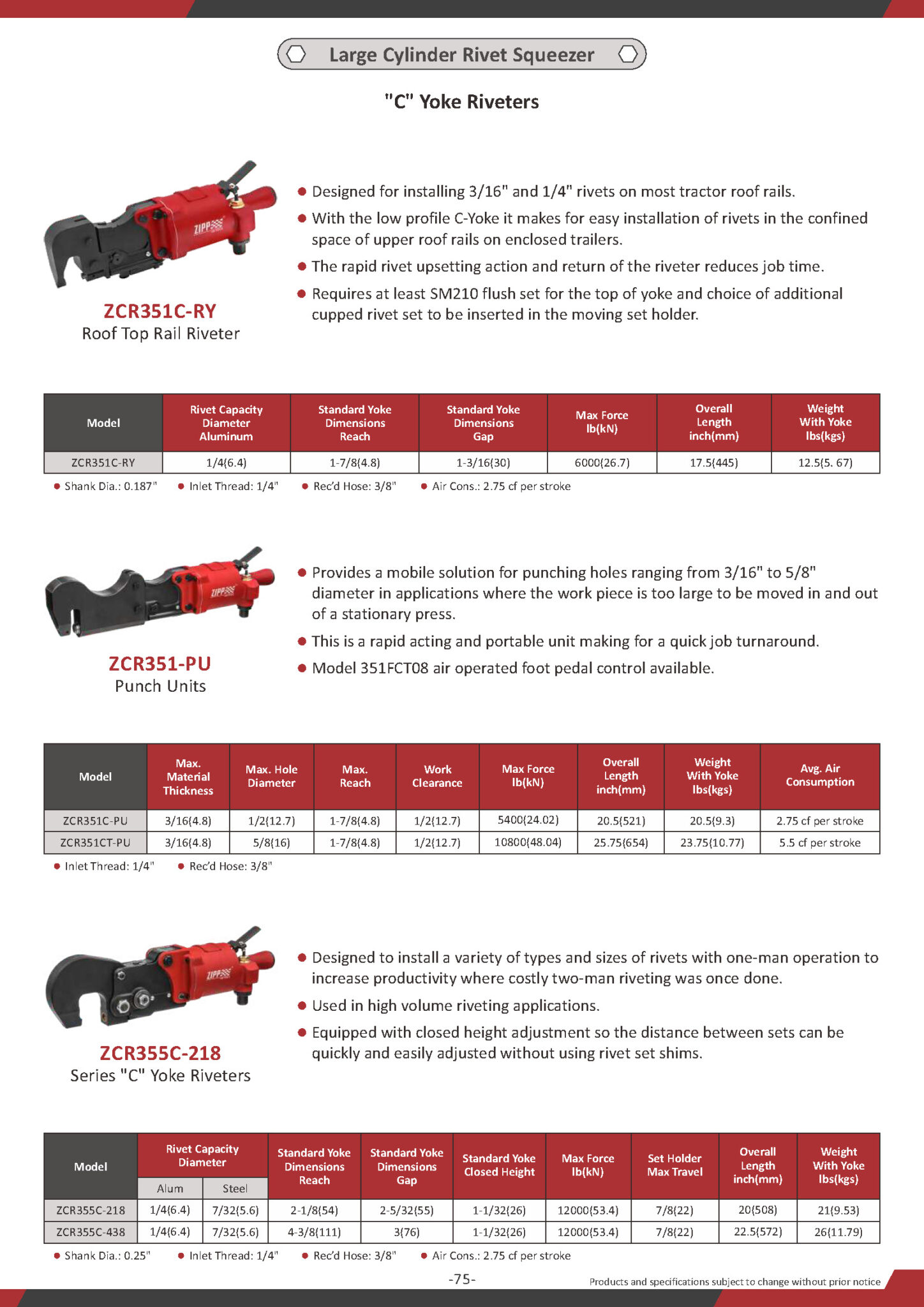
Introducing ZIPP TOOL’s Cutting-Edge Rivet Squeezer Series

Rivet Squeezer
Rivet Squeezer
Rivet Squeezer
Rivet Squeezer

Precision. Power. Durability.

ZIPP TOOL proudly announces the launch of its new Rivet Squeezer series, designed to meet the tough demands of modern manufacturing, aerospace, automotive, and heavy-industry assembly lines. Built for operators who expect trusted performance, comfortable handling, and top-quality joints, the new lineup provides excellent results in a variety of rivet installation tasks.

From compact handheld units to industrial-grade systems, ZIPP TOOL’s rivet squeezers set a new standard in fastening technology.

Reinventing Rivet Joining with Innovative Design

Riveted joints remain a cornerstone of structural assembly where strength, consistency, and fatigue resistance matter. ZIPP TOOL’s new rivet squeezers combine advanced mechanical engineering with operator-centric design, ensuring every rivet is seated precisely and securely without damaging sensitive materials or compromising joint integrity.

Key benefits of the new series include:

  • High-precision squeezing force for consistent rivet compression

  • Robust construction for durability in demanding environments

  • Ergonomic design for operator comfort and productivity

  • Low maintenance and long service life

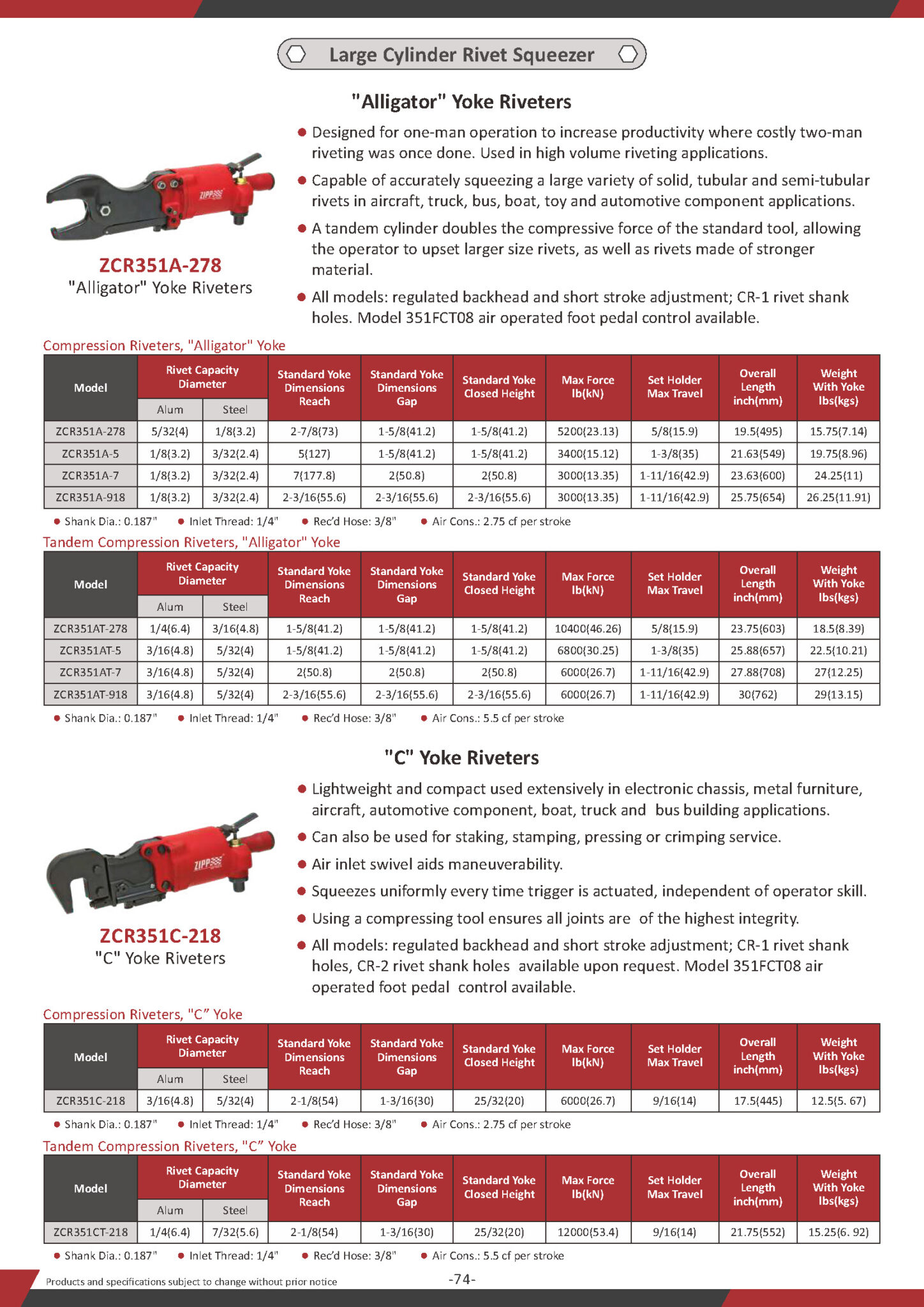
  • Alligator Yoke Riveters: Compact Strength

  • Engineered for Accessibility and Control

The Alligator Yoke Riveter is a compact yet powerful tool ideal for spaces where traditional squeezers struggle to reach. Its distinctive yoke shape — resembling an alligator jaw — offers a wide throat opening and exceptional visibility, making it perfect for confined or awkward installation areas.

Advantages of Alligator Yoke Riveters:

  • Slim profile for access in narrow or restricted spaces

  • Consistent squeeze force across the full jaw range

  • Lightweight yet rugged construction for operator comfort

  • Quick-change jaws for adaptability to different rivet sizes

  • Suitable for aerospace, metal fabrication, and on-site field repairs

Whether installing blind rivets in aircraft skins or structural panels on equipment frames, the Alligator Yoke Riveter delivers reliable, repeatable performance.

C-Yoke Riveters: Industrial-Grade Precision

Balances Power, Stability, and Ease of Use

For heavy-duty riveting tasks, ZIPP TOOL introduces the C-Yoke Riveter — a robust solution optimized for high-volume production and precision assembly. Its rigid C-shaped frame provides exceptional support and force distribution, ensuring each rivet is compressed accurately and repeatably.

Why Choose a C-Yoke Riveter:

  • Superior structural rigidity for demanding applications

  • High squeezing capacity for larger rivets and tougher materials

  • Stable work-holding for consistent joint quality

  • Ideal for automotive body assembly, heavy framing, and industrial fabrication

The C-Yoke Riveter is designed to integrate smoothly into both manual and semi-automated production environments, offering flexibility for floor-mounted stations, fixtures, and workbenches.

Applications Across Industries

ZIPP TOOL’s Rivet Squeezer lineup serves diverse industrial needs:

  • Aerospace assembly and structural riveting

  • Automotive platforms and body panel joining

  • Shipbuilding and offshore structural work

  • Rail transport components

  • Industrial fabrication and maintenance work

By delivering consistent compression and precise rivet deformation, these tools improve joint strength, fatigue resistance, and overall product quality.

Ergonomics and Operator-Focused Engineering

Beyond raw performance, ZIPP TOOL prioritizes operator well-being and productivity. Every rivet squeezer is designed with features such as:

  • Balanced weight distribution and cushioned handles

  • Low-vibration operation

  • Intuitive trigger and control layout

  • Simple maintenance and parts replacement

These enhancements reduce operator fatigue, increase throughput, and lower long-term operational costs.

Supporting Modern Manufacturing

ZIPP TOOL also offers a full range of optional accessories and service support, including:

  • Multiple jaw sets for different rivet sizes

  • Adjustable stops and spacers

  • Work-holding fixtures

  • Preventive maintenance packages

With global distribution and after-sales support, ZIPP TOOL ensures that every rivet squeezer performs reliably throughout its lifecycle.

A New Era in Rivet Installation

Whether you’re working in precision aerospace assembly or heavy industrial fabrication, ZIPP TOOL’s new Rivet Squeezer lineup — featuring the versatile Alligator Yoke Riveter and the heavy-duty C-Yoke Riveter — offers unmatched performance, durability, and ease of use. They deliver consistent joint quality, exceptional accessibility, and operational efficiency that modern industries require.

Experience the next generation of riveting technology with ZIPP TOOL — where precision meets power.

U.S. lowers tariff on Taiwanese goods to 15% in trade deal

The United States has agreed to lower tariffs on Taiwanese goods from 20 percent to 15 percent, without stacking them on existing most-favored-nation (MFN) rates, Taiwan’s Executive Yuan announced Friday. The deal, reached in trade negotiations that wrapped up Thursday (U.S. time), also provides semiconductors and related products with the most favorable treatment under Section 232 of the Trade Expansion Act, the Cabinet said.

It includes commitments to expand supply chain investment cooperation and deepen Taiwan-U.S. strategic partnership on artificial intelligence, according to the statement. The new 15 percent tariff aligns with U.S. rates on goods from major trade partners such as Japan, South Korea, and the European Union. With this agreement, Taiwan becomes the first country in the world to secure the most favorable treatment for its semiconductor and related product suppliers, which should greatly reduce uncertainties for the local semiconductor industry, the Cabinet said. Beyond the tech sector, lowering the import duty on Taiwanese goods to 15 percent without stacking it on existing MFN rates should help make Taiwan’s non-tech industries more competitive, as they will now be on equal footing with Japan, South Korea, and the EU, the Cabinet added.

Taiwan has also secured the most favorable treatment for other items such as auto parts, wooden furniture, and aircraft components under Section 232. Additionally, Taipei and Washington have agreed to establish a Section 232 negotiation mechanism.

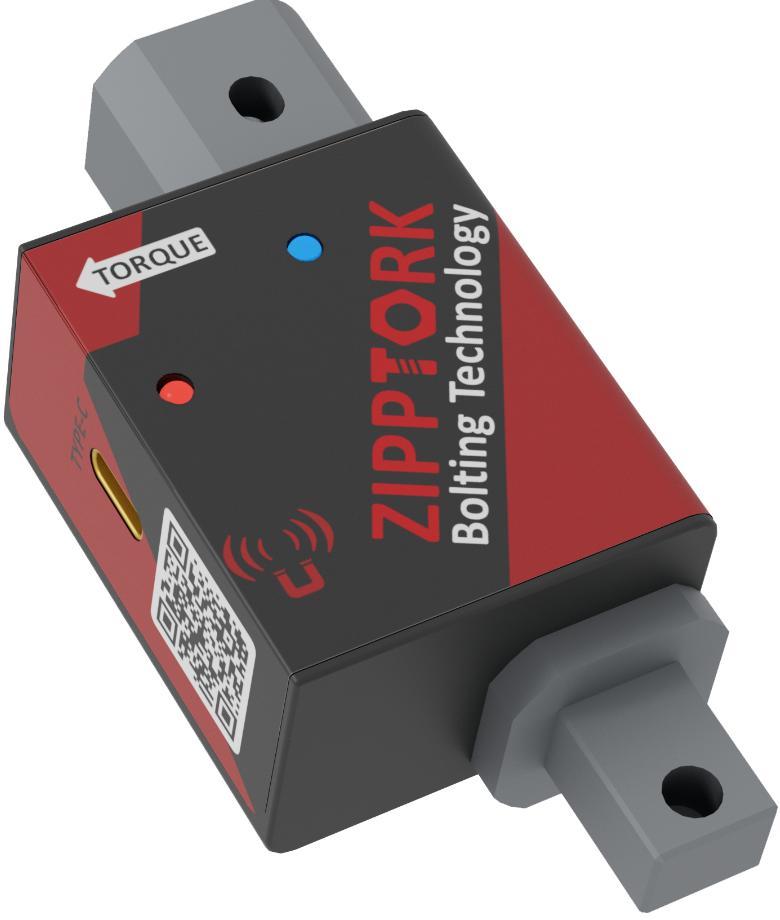
Real-Time Insight for Every Fastening with Wireless Rotary Torque Transducer

In modern manufacturing, fastening is no longer “just tightening a bolt.” Every critical joint is part of a traceable quality chain, and every missed or over-tightened bolt can become a warranty claim, a line stoppage, or a safety incident. This is precisely where the ZIPPTORK wireless rotary torque transducer delivers its value: it transforms any torque tool into a smart, data-driven tightening system.

Turning any torque tool into a smart tool

Traditional torque tools—pneumatic impact wrenches, pulse tools, DC/cordless nutrunners, electric screwdrivers, torque multipliers — are workhorses on the line, but most of them are “blind.” They deliver torque, yet the process itself is not directly measured. Quality is inferred from occasional audits rather than continuously verified for each bolt.

The ZIPPTORK wireless rotary torque transducer changes that by:

  • Mounting directly between the tool and the socket or fixture
  • Measuring actual dynamic torque in real time, even under impact or pulsation
  • Transmitting live torque data wirelessly to a controller, PLC, or IIoT gateway

In other words, you keep your existing tools, but instantly add a precise, intelligent sensor layer on top of them.

1. Real-time process monitoring and traceability

The most important benefit is simple but powerful: you see what is happening at the joint in real time.

With ZIPPTORK’s wireless rotary torque transducer:

  • Each tightening event produces a live torque curve, not just a pass/fail lamp.
  • Supervisors can monitor torque levels, angle (if integrated), and time profiles as the joint is tightened.
  • Every bolt tightening can be logged with torque/time data, operator ID, tool ID, and timestamp.

This enables:

  • 100% process monitoring instead of sampling-based audits
  • Traceability for every fastener, which is increasingly required by OEMs and Tier-1 suppliers
  • Immediate visualization of anomalies such as cross-threading, missing parts, or hard/soft joint variations

When a customer asks, “How do you know this joint was tightened correctly?”, you no longer answer with assumptions—you show recorded evidence.

2. Easy integration with any torque tool

A major practical advantage of ZIPPTORK’s solution is its tool-agnostic design.

The wireless rotary torque transducer can be integrated with:

  • Pneumatic impact wrenches
  • Hydraulic and pneumatic pulse tools
  • DC and cordless nutrunners
  • Electric screwdrivers and torque tools
  • Torque multipliers and gearboxes
  • Custom automated tightening spindles

Instead of replacing entire tool fleets with expensive “smart tools,” manufacturers can:

  • Retrofit existing tools with wireless torque sensing
  • Standardize process monitoring across different tool brands
  • Phase in smart fastening capability line by line, station by station

This dramatically reduces the upfront investment and allows companies to move toward Industry 4.0 at their own pace, without scrapping tools that still have years of life left.

3. Elimination of cable problems in harsh environments

Cable-based rotating torque sensors are notoriously tricky to use in real production:

  • Cables get twisted, damaged, or cut.
  • Slip rings require regular maintenance and still introduce noise and reliability issues.
  • Operators dislike extra cables hanging from tools—they interfere with movement and ergonomics.

ZIPPTORK’s wireless rotary torque transducer eliminates these problems:

  • No rotating cable between the sensor and the receiver
  • No slip rings needed
  • Reduced risk of downtime from broken or tangled cables.

This is especially critical in high-vibration, high-impact applications such as:

  • Truck and bus wheel assembly
  • Construction equipment and heavy machinery
  • Wind turbine hub and flange bolting
  • Rail, shipbuilding, and large structural joints

The transducer is designed to survive the same tough conditions as the torque tool itself, making it a practical choice for real industrial use, not just a lab instrument.

4. Improved fastening quality and reduced rework

With real-time torque curves and wireless feedback, engineers can optimize the tightening process instead of guessing:

  • Define optimal torque windows and shut-off points
  • Detect abnormal joint behavior (e.g., stripped threads, missing washers, misalignment)
  • Identify variation between tools, operators, or shifts

As a result:

  • Rework is reduced because issues are caught immediately at the station
  • Line stoppages caused by fastening problems are minimized
  • Final inspection may become simpler or faster due to the trusted process data upstream

Quality teams gain a continuous stream of fastening data for statistical process control (SPC), capability studies, and continuous improvement projects.

5. Enabling predictive maintenance for tools

Tools wear out. Impacts get weaker, clutches drift, pulse units lose efficiency. Usually, this is noticed only after quality issues arise, or when operators complain that “the tool feels weak.”

By continuously monitoring torque output with ZIPPTORK:

  • You can track the actual delivered torque trend over time for each tool.
  • A gradual decline in production can be identified before it becomes a quality problem.
  • Maintenance can be scheduled based on performance, not just calendar time.

This transforms maintenance from reactive (“Fix it when it fails”) to predictive (“Service it before performance drops below spec”). The outcome is:

  • Fewer unexpected breakdowns
  • Extended tool life
  • More stable tightening performance across the line

6. Seamless integration with MES, PLC, and IIoT systems

ZIPPTORK’s wireless rotary torque transducer is designed with connectivity in mind. When paired with the appropriate controller or gateway, torque data can be:

  • Sent to PLCs for immediate OK/NOK decision logic
  • Logged in MES or QMS systems for traceability records
  • Streamed to cloud-based IIoT platforms for analytics and dashboards

This allows manufacturers to:

  • Consolidate tightening data with other production information (e.g., serial numbers, test results, operator information)
  • Implement advanced analytics to correlate torque behavior with failures, scrap, or warranty claims.
  • Build dashboards for plant managers that show fastening quality in real time across multiple lines or factories.

In short, the rotor and sensor at the wrench become the frontline data sources for your digital factory.

7. Flexible deployment: audits, development, and complete in-line control

Another practical advantage of ZIPPTORK’s rotary transducer is its flexibility in deployment. It can be used in several ways:

  1. Tool audits and calibration checks
    • Quickly verify whether tools still deliver the specified torque in real working conditions.
    • Compare different tool models or brands under the same joint conditions.
  2. Process development and optimization
    • Fine-tune torque settings, pulse times, or shut-off parameters when introducing new models.
    • Understand joint behavior (soft, hard, prevailing torque, etc.) before locking in the process window.
  3. Permanent in-line monitoring
    • Keep the transducer on the tool or station as a permanent process monitoring element.
    • Combine with controllers and poka-yoke logic to enforce correct tightening sequences.

This flexibility means you can start small—using a few systems for R&D and audits—and later scale to full line coverage once the benefits are proven.

8. Enhancing safety and compliance

In industries such as energy, pressure vessels, transportation, and structural engineering, improperly tightened bolts are more than a quality issue—they are a safety risk.

By integrating ZIPPTORK wireless rotary torque transducers:

  • Critical joints (flanges, lids, hubs, couplings, structural connections) can be tightened to validated torque levels.
  • Legal and regulatory requirements for documentation and traceability are easier to meet.
  • Customers get documented proof that each fastener was tightened within the required specification.

This not only reduces risk but also strengthens trust with end-users, inspectors, and certification bodies.

9. Cost-effective path to Industry 4.0 fastening

Many manufacturers hesitate to adopt fully integrated “smart tools” because of:

  • High upfront costs
  • Vendor lock-in
  • Uncertainty about return on investment

ZIPPTORK’s wireless rotary torque transducer offers a different path:

  • Use the tools you already own, from multiple brands.
  • Add smart torque monitoring where it matters most—on critical joints, key stations, or new product lines.
  • Scale up gradually: one station, one line, one plant at a time.

The result is a cost-effective, low-risk strategy to upgrade fastening processes to Industry 4.0 standards without a disruptive overhaul.

The ZIPPTORK wireless rotary torque transducer is more than a sensor; it is a bridge between traditional torque tools and modern smart manufacturing. By integrating directly with almost any torque tool and streaming real-time torque data wirelessly, it delivers:

  • Continuous process monitoring and full traceability
  • Higher product quality and reduced rework
  • Predictive maintenance and extended tool life
  • Seamless integration with PLC, MES, and IIoT systems
  • A flexible, economical path to Industry 4.0 fastening

For manufacturers facing stricter quality demands, more complex assemblies, and pressure to digitalize their operations, ZIPPTORK provides a practical, scalable way to turn everyday torque tools into intelligent, data-driven assets—without starting from scratch.

ZIPP GROUP to Showcase Innovative Solutions at Taipei Aerospace & Defense Technology Exhibition (TADTE) 2025

STA Transducer

ZIPP GROUP to Showcase Innovative Solutions at Taipei Aerospace & Defense Technology Exhibition (TADTE) 2025

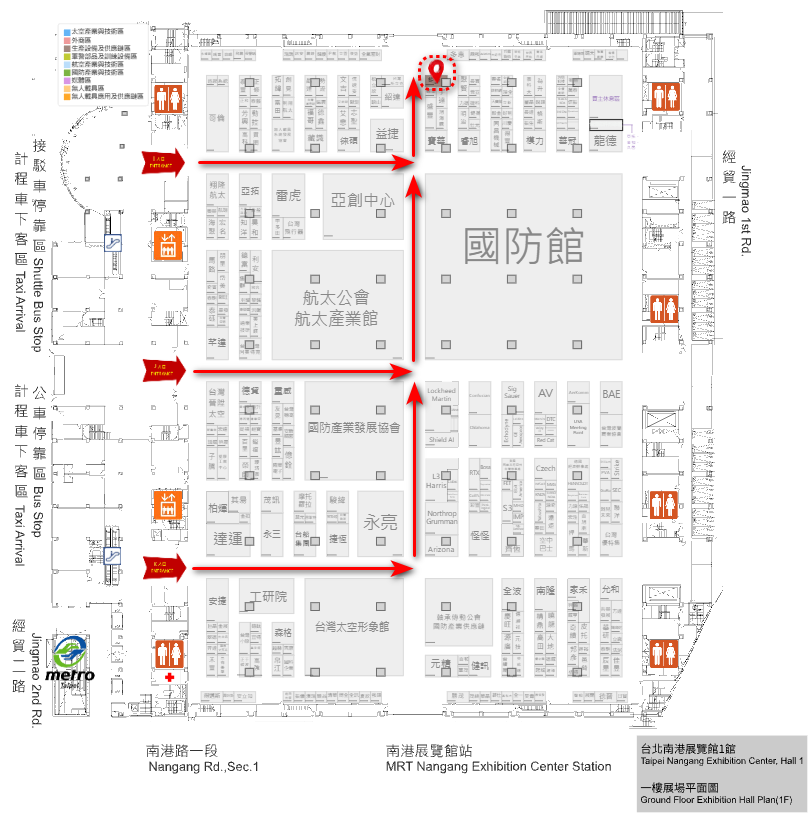
booth direction
booth direction

ZIPP GROUP is proud to announce its participation in the Taipei Aerospace & Defense Technology Exhibition (TADTE) 2025, taking place from September 18 to 20, 2025, at the Taipei Nangang Exhibition Center, Hall 1 (TaiNEX 1), 1F, located at No. 1, Jingmao 2nd Rd., Nangang District, Taipei, Taiwan. Visitors can find ZIPP GROUP at Booth I0801a.

As one of Asia’s leading international platforms for aerospace and defense industries, TADTE brings together global innovators, manufacturers, and defense technology providers. ZIPP GROUP will showcase its advanced solutions and cutting-edge technologies designed to meet the evolving demands of aerospace and defense applications.

The company looks forward to engaging with industry professionals, partners, and visitors to explore collaborative opportunities and present how ZIPP GROUP’s expertise in precision engineering and innovation contributes to high-performance and reliable solutions for critical missions.

ZIPP GROUP warmly invites all attendees to visit Booth I0801a to experience its latest developments firsthand.

Exhibition details @ https://www.tadte.com.tw

This website uses cookies to ensure it works properly and to help us understand how visitors use the site. Cookies are small text files stored on your device. By using this website, you consent to our use of cookies.